Wine News Review

Month: October 2007

  • Eight good reasons to attend a wine tasting — jewels of Central Italy

    Combine worse-than-expected after-work traffic, a cold drizzle and a broken umbrella. The unmistakable ingredients for a pretty miserable evening, right?

    Wrong — not so miserable at all if once you arrive at your destination you’re greeted by a forest of wine glasses on top of pressed white tablecloths and cheery servers starting to pour — you guessed it — wine!

    Welcome to a “Central Italy Wine Tasting,” I thought to myself on that dark and rainy night last week, glad that I wasn’t too late to miss any of the eight featured selections, gladder still after sitting down and immediately being served a 2005 Monte Schiavo Verdicchio Classico ($14.85). Delicately light and refreshingly fruity — the broken umbrella became but a distant memory.

    The Verdicchio was soon followed by a 2006 Podere Canneta Vernaccia di San Gimignano ($13.99), just as fresh and clean as the one before it but laced with a surprising crispness. By this time, all of us at the table had made our introductions, as we began settling into a certain zone of contentment with smiles and nods all around.

    Meanwhile, the host of this sparkling event, Laurent Guinand of GiraMondo Wine Adventures, a member of the Society of Wine Educators, was helping us interpret the varied aromas and tastes, and dispensing insights about the different terrains that conceived them. His cordially informative presentation alone would have been worth driving some distance in that crummy traffic and weather.

    For wine lovers, the central area of Italy is a fabled land, spanning the regions of the Marche, Umbria, Lazio and, of course, Tuscany.

    Charming towns, Roman ruins, cypress-dotted hillsides, ancient castles — producing, among other jewels:

    • 2005 La Villetta Frascati Superiore ($14.85) — light, dry and balanced.
    • 2005 Villa Puccini Chianti Riserva ($19) — an “excellent” Chianti, according to my notes, ruby-colored and dry but not biting.
    • 2003 Vignabaldo Rosso di Torgiano ($9.99) — darker and more earthy than the Villa Puccini, “rustic,” as Laurent put it.
    • 2004 Le Volte Tenuta dell’Ornellaia ($30) — I found it “lively,” the label called it “vivacious” — a mixture of Sangiovese, Cabernet Sauvignon, Merlot and Super Tuscan that seemed to leave everyone pleased.
    • 2000 Lamole di Lamole Vin Santo del Chianti Classico ($22) — a very good year, Laurent noted, making for a very pleasant dessert wine.
    • And last but definitely not least, a 1998 Rienzi Brunello di Montalcino ($65) — my personal favorite, with its layers of fruit and spice revealing, as Laurent suggested, what’s meant by the term complexity.

    All in all, eight good reasons to attend a wine tasting.
     

  • The Web’s latest wine buzz, 10/28/07

    Tune in to what top wine bloggers and experts are decanting into cyberspace with handpicked highlights of their latest and greatest, ranging from reviews of luscious rosés and a sweet desert wine to the skinny on Montalcino and the care of stemware.


    For Master Sommelier Ronn Wiegand at Vino!, Autumn’s deepening signals it’s time to focus on rosés — the dry ones, which are “usually fuller bodied and more complex in flavor than most white wines.” He serves up 16 international recommendations, many of them well within Wine News Review’s fairly frugal affordability index. (Full disclosure: Chalk it up to the seasonal vibes, in advance of reading Wiegand’s paean, I gravitated to a lovely organic rosé the other day, a 2006 Chateau Miraval Cotes de Provence. Lively and dry, as “lip-smacking” as the label promises. No autumnal melancholy states with this baby around!) Anyway, to quote Wiegand…

    Dry rosés have improved dramatically in quality in recent years, both because more top wineries are producing them and because the wine type is being treated with “respect” (that is, wines are being produced from quality grapes, by experienced vintners).


    Speaking of coincidences, my gaze naturally gravitated to a Wine News cover story on Brunello, after trying a splendid 1998 Rienzi Brunello di Montalcino recently. (Frugality warning: At $65, alert readers will surely note that it’s way beyond the affordability index — but, hey, it was at a tasting event so I had to drink it.) Written by Kerin O’Keefe, this piece offers everything you might want to know about the history and current events of Brunello and its birthplace, Montalcino — an in-depth story with some suspense thrown in.

    Montalcino has become an international sensation. Americans, in particular, can’t seem to get enough of what is undoubtedly Tuscany’s most prestigious wine, with one in every four bottles of Brunello made destined for U.S. shores. Yet the elite appellation is facing certain challenges that may require tough remedies to keep quality up and bring what has become the enological pride and joy of all of Italy to new and sustained levels of greatness. 


    Dorothy J. Gaiter And John Brecher at The Wall Street Journal provide some delicious instructions on how to cap off a sensational dinner with friends — a “great finishing touch,” courtesy of Muscat, “with its unique aromas and tastes of honeysuckle, apricots, peaches and just-picked grapes.” With reviews of eight bottles, some quite affordable .

    It probably will take some effort to find a Muscat Canelli. Many stores won’t have any and it’s unlikely you’ll find a big selection anywhere. But they’re out there— we bought ours from six states. So our advice is that sometime soon, long before your next big dinner party, call around and see if you can find one. Then, after dinner, don’t ask your friends if they want to try a sweet wine— they’ll likely say no. Just open and pour. The wine will do the rest.


    An estimated 3 to 5 percent of cork-sealed wines go bad, and the blame often unfairly goes to the winery rather than, say, bad handling on the way to the shop or restaurant. Here’s a Washington Post behind-the-scenes glimpse by Karen Page and Andrew Dornenburg at the extent to which wineries are trying to fight back. With some wine recommendations thrown in.

    Even if a bottle of wine leaves its winery in immaculate condition, the road it travels to your glass is fraught with peril every step of the way. Because wine is a living, breathing substance, it can be mortally wounded by improper handling. A wine that starts out perfect can be ruined by many factors: how it is shipped and stored, when and with what it is poured.

    Although a number of those elements are out of the winemaker’s hands, if a bottle disappoints, customers probably will blame the winery whose name is on the label. That is why some wineries increasingly are going to extraordinary lengths to ensure customer satisfaction.


    There are times when the reason for having printers attached to computers is crystal clear — that is, bring along this Vinography review of the Wine & Spirits Top 100 Wineries for 2007 event next time you’re headed to a wine shop, perhaps in case one of these selections happens to be on sale.

    Thankfully the Wine & Spirits list doesn’t actually rank these wineries from 1 to 100, which would be inane to say the least. They just publish an issue with profiles of each and list their high scoring wines (which presumably got them on the list to begin with).

    But more to the point, the magazine also happens to put on a tasting where all 100 of these wineries are invited to pour the wines that were rated highly by the magazine, and it ends up being one hell of a tasting.


    Speaking of crystal, there’s “no excuse for stemware abuse,” says Wine Enthusiast. A quick and savvy primer on how to wash, dry and otherwise care for glassware so as to avoid unwanted tastes and odors. Stuff you should know.

    You’ve gone to so much trouble to select the right wine, purchase the perfect glasses, serve just the right food — it would put a damper on your dinner to serve in cloudy glasses with a faint odor. If you’re guilty of neglecting your stemware, read on. The fact of the matter is that the way in which you wash and care for wine glasses has a direct effect on the taste of wine. Properly caring for your crystal will insure that your wines always taste their best. 

  • Weekend wine list — experts’ picks: ‘terrific’ Riesling to ‘seductive’ Syrah

    Comparing the picks: A survey of recent selections from popular wine experts. Whenever there’s an option, I highlight the more-affordable wines, focusing on possible choices for weekend purchases. Check their websites for full descriptions and other picks:

    2004 750 Langwerth Von Simmern Riesling Kabinett Rheingau, Germany:
    Natalie MacLean — you’ll find it to be a “terrific, well-balanced riesling with refreshing aromas of lime and citrus,” goes well with chicken, pork, ham. $22.95

    Pacific Rim Chenin Blanc:
    Jerry Shriver — “hits you with a seductive flowery bouquet, which leads to faintly sweet and lush pear flavors and brown-spice notes” — recommended with spicy Asian seafood dishes. $12

    Cockburn’s Ten Year Old Tawny Port:
    Jay McInerney — “lighter and mellower than the Vintage Ports from this house and slightly drier in style than other tawnies.” $26.99

    Etim Blanco 2005 Montsant:
    Jancis Robinson — she calls this 100% Garnacha Blanca “a revelation and a bargain … a full bodied, flavour-packed yet refreshing dry white.” £6.99

    Stefano Moccagatta 2004 Tannat:
    Edward Deitch — “one of the best red wines I’ve tasted this year … elegant and refined, full of dark berry fruit — blackberry, blueberry and boysenberry.” $26

    Colli Orientali del Friuli, Pinot Grigio ‘Ramato’, Visintini (2006):
    decanter.com — “marvellous wine from Grave del Friuli breaks the Pinot Grigio mould,” with its pale copper colour and “lovely purity of fruit.” £8.95

    2003 Goose Ridge Vineyards Columbia Valley Syrah:
    Lynne Char Bennett — a “rewarding” wine whose aspects include “dark woody notes, peppery bacon, extracted blackberry,” among an ample list of Washington state Syrah and Rhone-style blends featured here. $20

    Tip: Print out this list and bring it to you local wine shop — even if a specific favorite isn’t available, ask the salesperson to recommend something similar. Or try browsing the latest wine reports from this custom collection of hundreds of news websites — filtered for bargains, continuously updated, and quick and easy to scan:

    • Reds (from Beaujolais to Zinfandel)
    • Whites (from Chablis to Sauvignon Blanc).

    To hit closer to home, try WNR’s Advanced Wine Search tool and see what wine finds local columnists and wine experts may be writing about in your area. Once there, just type in your city and state (within quotation marks, as in, “Napa, California”), to get results ranked by relevance.

    Or dig into some perennial standbys at SFGate.com’s Top 100 Wines of 2006, the Top 100 of 2006 list (PDF download) from Wine Spectator and the list of 50 Wines You Can Always Trust from Food & Wine.

    Attracted to a bottle that’s advertised in the local paper or sitting on the local wine store shelf?

    Do a little background research with Wine Enthusiast’s free, searchable Wine Buying Guide—either with a specific name or by types and price. For a little extra info, try Robert Parker’s handy Vintage Chart. Or see what the online wine community says about it with the search tools at cork’d, snooth or Wine Log.

    Once you’ve selected the wine, you naturally want to decide what to eat with it. For some savvy guidance, try Natalie MacLean’s Wine & Food Matcher, which boasts a database of 360,000 wine-food pairings.

    The Web is about community. So take a moment to comment about your experience with a particular wine — to help steer others to or away from it. And of course, have a great weekend!

  • Gimme-your-wine-photo: In this edition, my pal Steve tries to make me drool

    Click image for photogallery

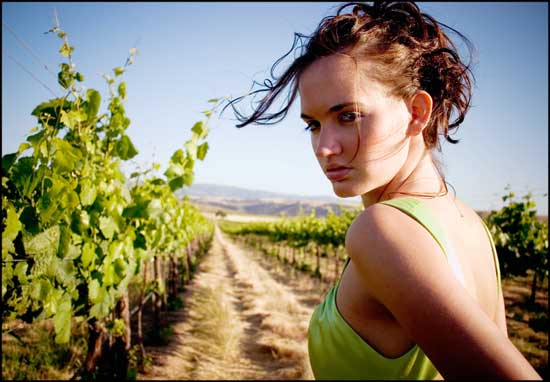
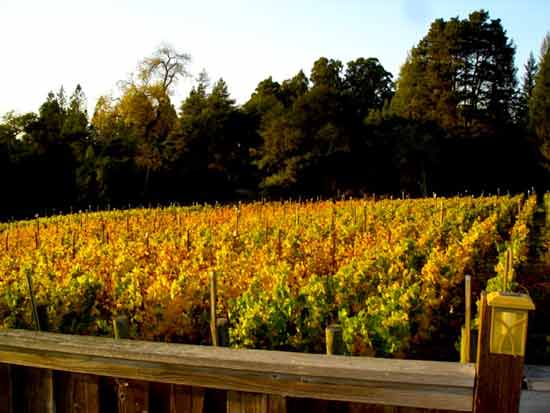
    Wine Photo of The Day by Stephen Pizzo — Click image for photogallery

    Wine Photo of the Day by Stephen Pizzo

    This photo from my friend Steve gave me an idea for a new Wine News Review feature — the “gimme-your-wine-photo” edition. Goes like this: You send me a cool wine-related photo, I help make you spectacularly famous, among Wine News Review readers. Here’s where to contact me.

    Steve’s e-mail msg was short and sweet: “Hey Sam, here’s a photo of my neighbor’s little vineyard to show your readers what Sonoma County looks like this time of year.” I wrote back and asked whether there was an opening for a grounds keeper. Still waiting for a reply on that.

    UPDATE: (10/28/07) — Steve sent over some additional shots — enough for a guest photogallery, which you can see by clicking here. Also Helfer Vineyard’s Patricia Helfer responded, via Steve, to my grounds-keeper query, saying they’re accepting applications for vineyard workers. “Lots of fresh air and exercise.” Tempting.

    Anyway, got a photo to share? Gimme!

  • An earthy bargain — organic wine from Chile’s Colchaqua Valley

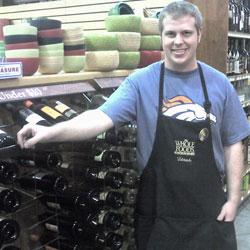
    Marc, wine assistant at Whole Foods
    Marc, wine assistant at Whole Foods

    I’m lurking in the $10-and-under section of the local Whole Foods grocery store (true to Wine News Review’s fairly frugal affordability index), thinking I’m in the mood for a certain Montepulciano. Don’t ask me why — at that place and point in time, I think it had something utterly to do with the name.

    Say it. Let it roll over you tongue. Monte-pul-ciano. Ah, sweet, seems to almost transport you on wings of gossamer wine to that storied ridge of Monte Poliziano in Tuscany’s province of Sienna. (Read more about it here.)

    Anyway, I’m admiring the lovely contours of a bottle of this particular product of that storied region, when Marc, the wine assistant, drops by to chitchat and we kick off a conversation about what he recommends. Right off the bat, he asks me if I’d like to try an organic wine.

    Blog Action Day
    Blog Action Day

    Hmmm. Well, I certainly haven’t forgotten that I recently blogged about organic wines, on Blog Action Day 2007. So, yes, I say, I do like organic wines. He recommends an aptly named Natura Carmenere Valle Colchagua 2005, from Chile’s Emiliana vineyards, grown without the use of pesticides or chemicals.

    Hmmm. I admire the bottle’s contours and abstractly artistic label, which advertises “notes of ripe cherries and plums.”

    I read a little further. “Organic viticulture bring forth the true characters of the vineyard terroir and allows the grapes to express themselves fully.”

    I’m sold.

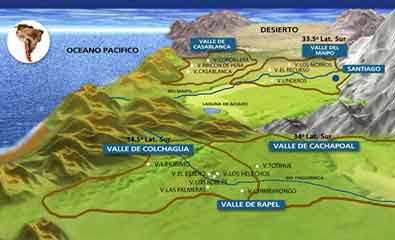
    After taking it home, I do a little research. The Colchaqua Valley, though not as storied as Monte Poliziano, is quite exotic in its own right, as the Emiliana website illustrates. Bounded by the Pacific Ocean to the west and the Andes Mountains to the east, the valley is caressed by an “extraordinary combination of maritime breezes and Andean winds.”

    The result is delicious. Not only does the wine provide the advertised fruitiness, there’s a dry, rich, earthy complexity that, well, makes we want to take another sip, even as I type this thing.

    Leslie Sbrocco at Wine Review Online seems to have had a similarly positive reaction. About the very same Natura Carmenere 2005, she writes: “An ideal wine to get acquainted with the beauty of Carmenere, Chile’s unique red grape. Most affordably priced versions can be too herbal and earthy, but this wine captures the spicy, dried herbal notes of Carmenere coupled with its sultry texture.”

    Priced at around $10-12, the Emiliana Carmenere, Chardonnay, and Cabernet Sauvignon “bust the current belief that organically grown wines are pricey.”

    Colchaqua Valley
    Graphic from Emiliana Vineyards

    So, thanks, Marc, for a fine recommendation. But truth be told, it wasn’t entirely his salesmanship (excellent though it was) that made me go organic rather than follow my Montepulciano inclination. I was primed, so to speak, by a column by the Dalai Lama in the local paper, The Washington Post, this past weekend.

    No, Tenzin Gyatso, the spiritual leader of Tibet, doesn’t appear to be a drinking man. But something he said in that piece struck an organic note, and it may have had a bearing on my decision on what to buy:

    The rapid changes in our attitude toward the Earth are also a source of hope. Until recently, we thoughtlessly consumed its resources as if there were no end to them. Now not only individuals but also governments are seeking a new ecological order. I often joke that the moon and stars look beautiful, but if any of us tried to live on them, we would be miserable. This blue planet of ours is the most delightful habitat we know. Its life is our life, its future our future. Now Mother Nature is telling us to cooperate. In the face of such global problems as the greenhouse effect and the deterioration of the ozone layer, individual organizations and single nations are helpless. Our mother is teaching us a lesson in universal responsibility.

    Maybe you’re thinking, come on, vinothekid — what possible difference could the purchase of a single bottle of organic wine make?!

    The Dalai Lama had a response to that. “Large human movements spring from individual human initiatives,” he wrote. “If you feel that you cannot have much of an effect, the next person may also become discouraged, and a great opportunity will have been lost.”

    So there you have it. Oh, and one other thing, I’m adding organic wines to my listing of wine Bargains in the News (right column on the front page). As they say in Monte Poliziano, salute!